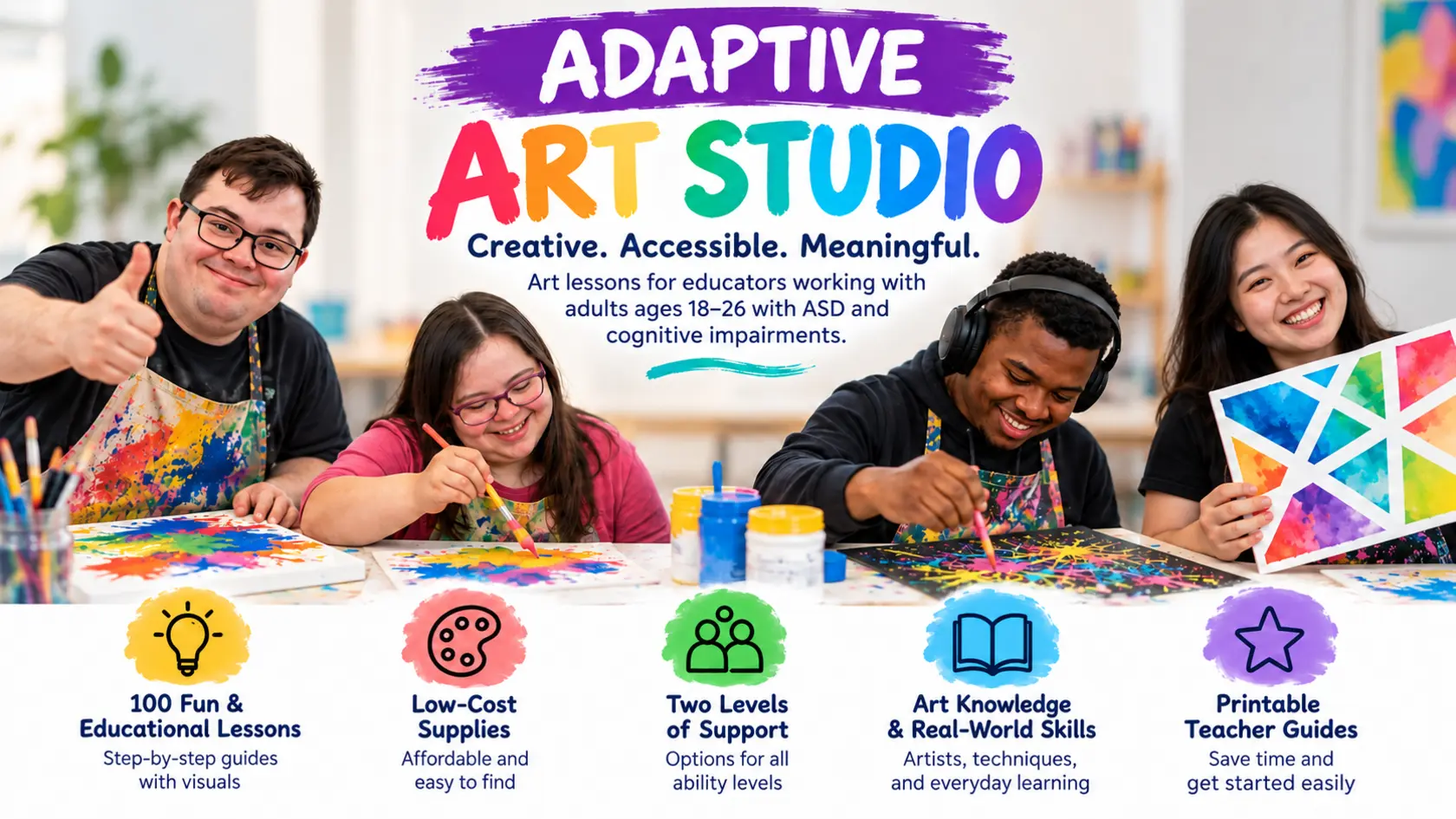
Expanded library · 100 complete lessons
Make art feel possible, purposeful, and personal.
One hundred age-respectful projects use affordable materials, clear step-by-step directions, and flexible support. Every lesson includes a matching success example and a printable teacher guide.
Project library
Choose a project that fits today
Search by project, material, access need, or art skill. Open any card for the full step-by-step lesson and print guide.
100 lessons
No lessons match yet.
Try a broader word or choose “All art focuses.”
Support without lowering expectations
One creative goal, two ways to participate
Both pathways lead to a finished artwork and meaningful choice-making. Support changes the access—not the dignity of the project.
More guided support
Offer two clear choices, model one action at a time, use adapted tools, and allow assisted positioning or hand-under-hand support when welcomed.
More independent support
Invite the artist to plan materials, follow the visual checklist, make design choices, and describe one idea or decision.
Teacher toolkit
A reliable routine for every lesson
Use the same rhythm each time so artists know what is coming and can focus on creating.
- 1Welcome & preview5 min
Show the success example and name today’s art idea. Make it clear that every artwork can look different.
- 2Model one step5 min
Demonstrate or describe one action, then use the lesson's visual, tactile, or spoken cue. Keep language short and concrete.
- 3Create with choices20–25 min
Offer materials in small trays. Pause, observe, and provide the least support needed for success.
- 4Share & reflect5 min
Ask the lesson question. Artists may answer by speaking, pointing, showing, writing, or using AAC.
- 5Reset the studio5 min
Use labeled bins and a visual cleanup sequence. Photograph or display finished work with permission.
Choice is participation.
An artist may observe first, use a dry-material alternative, wear gloves or headphones, work in a quieter space, or stop when the artwork feels complete.